Building date:
Original use: Schoolhouse
Corner structures: Variable
Mortar application and content: Vertical, slight embellishment. Vertical pyramids
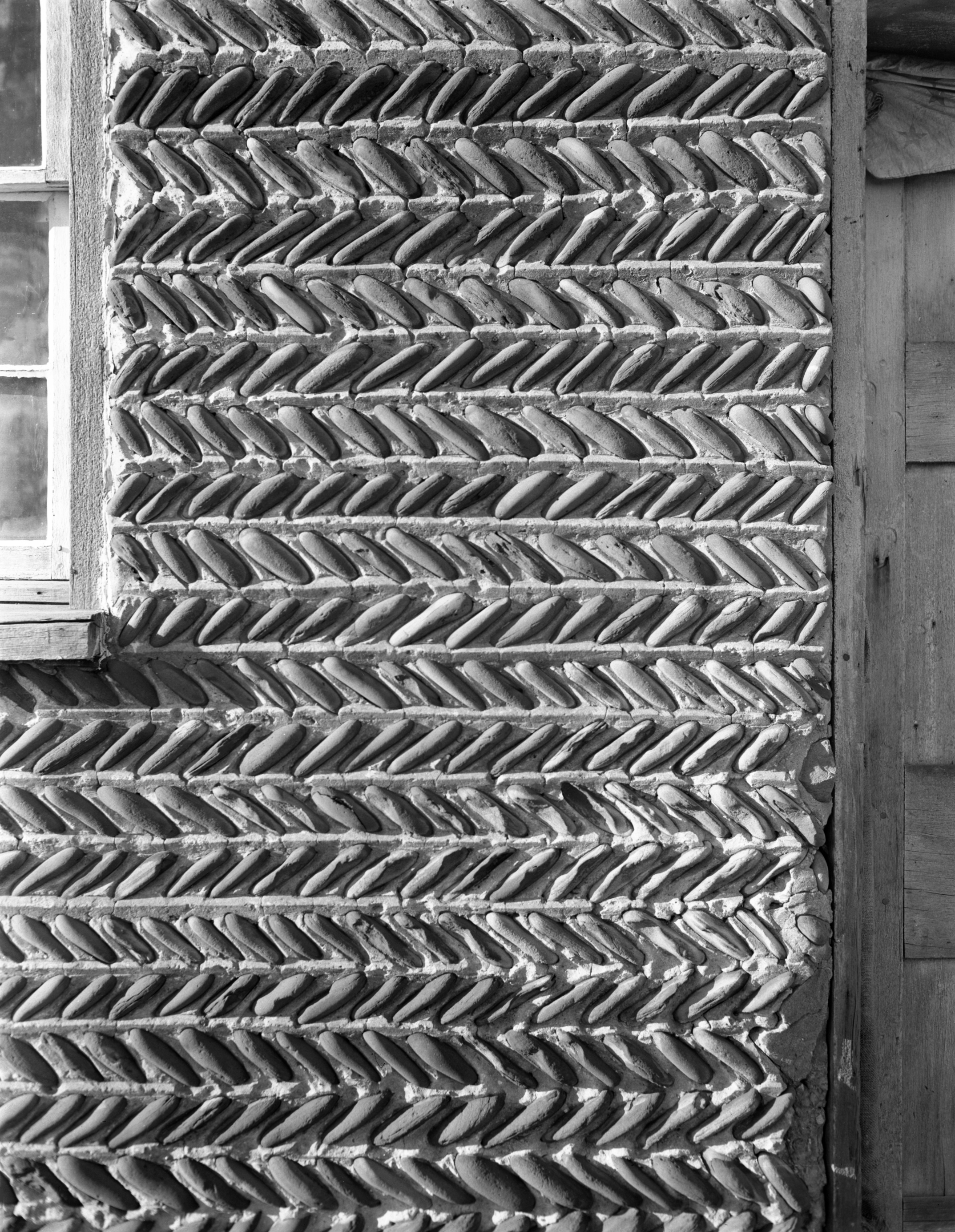
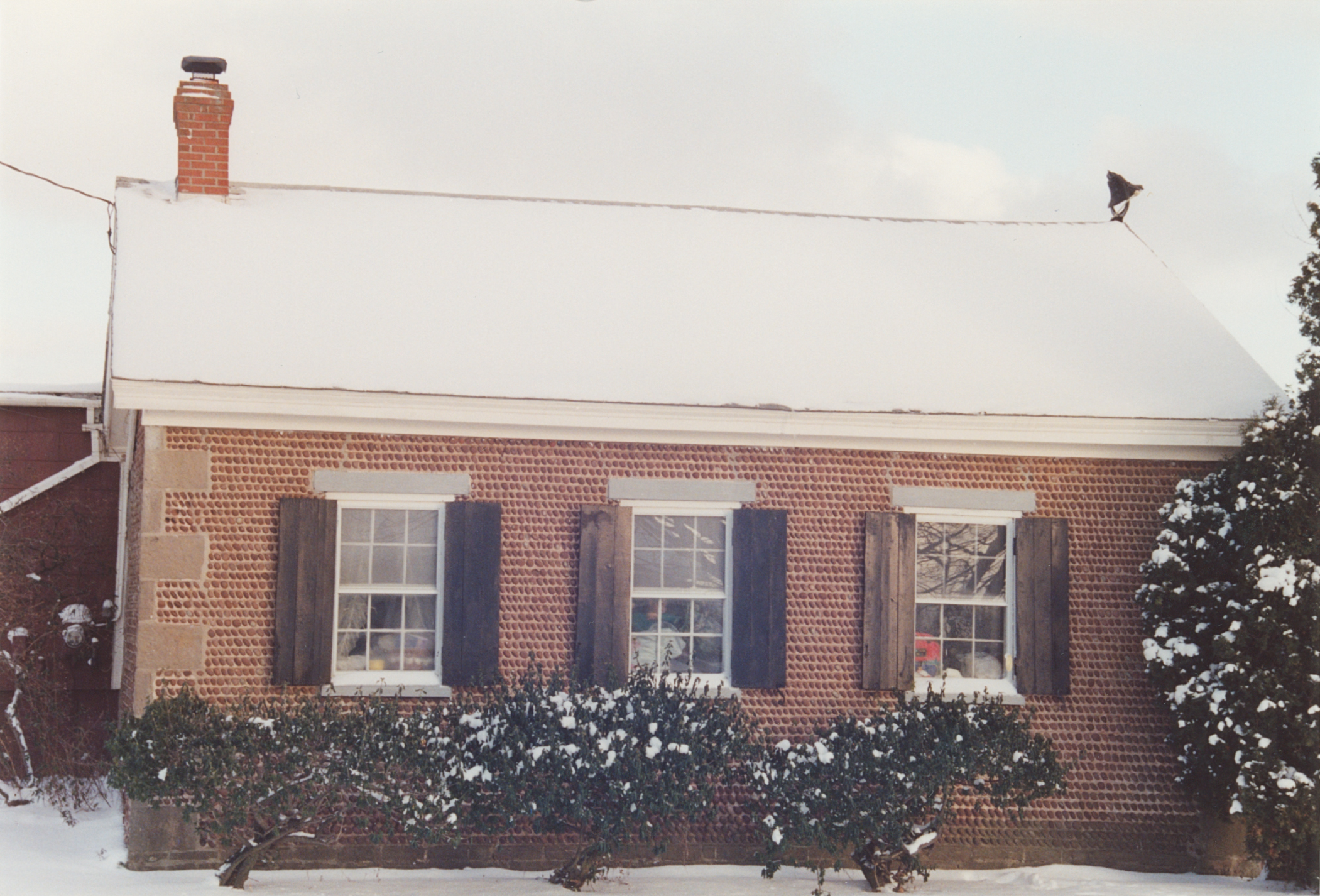
Types and uses of stones: Small red sandstone. Herringbone anywhere - open side herringbone.
Types and choice of windows: Lentils wood
Structures with similar masonry details: Mar-17 Huber
Masons who worked on building:
Unique features:
Map views courtesy Google Maps. Address is Google Earth confirmed; 43°09'49.76"N 77°12'20.74"W. Current owner of record, Boerman as of the 2019 Tax Roll.
Town of Marion and Wayne County Maps
Roudabush Survey states name as Harters, whereas the photograph label states Harter. Harters is used, but not confirmed.
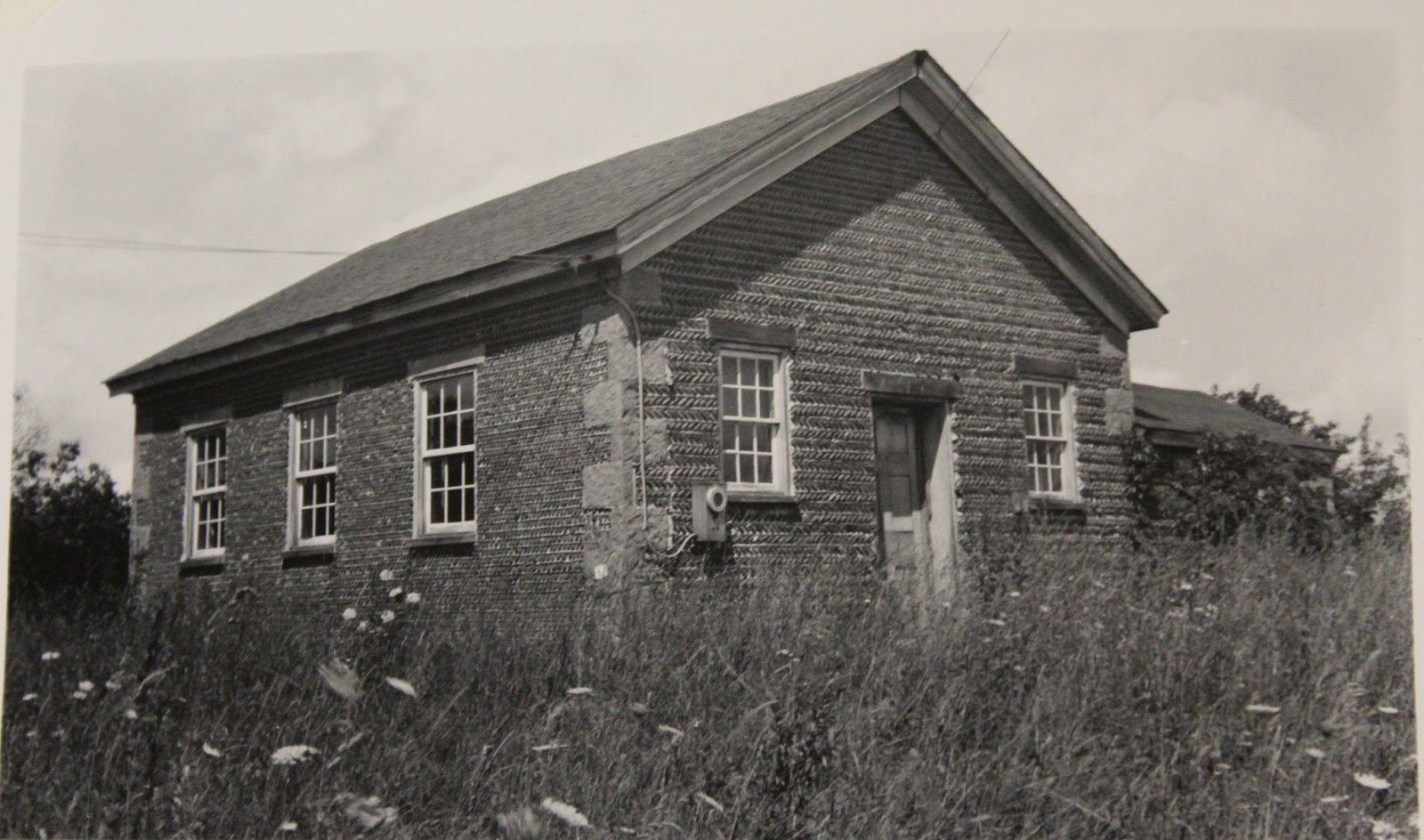
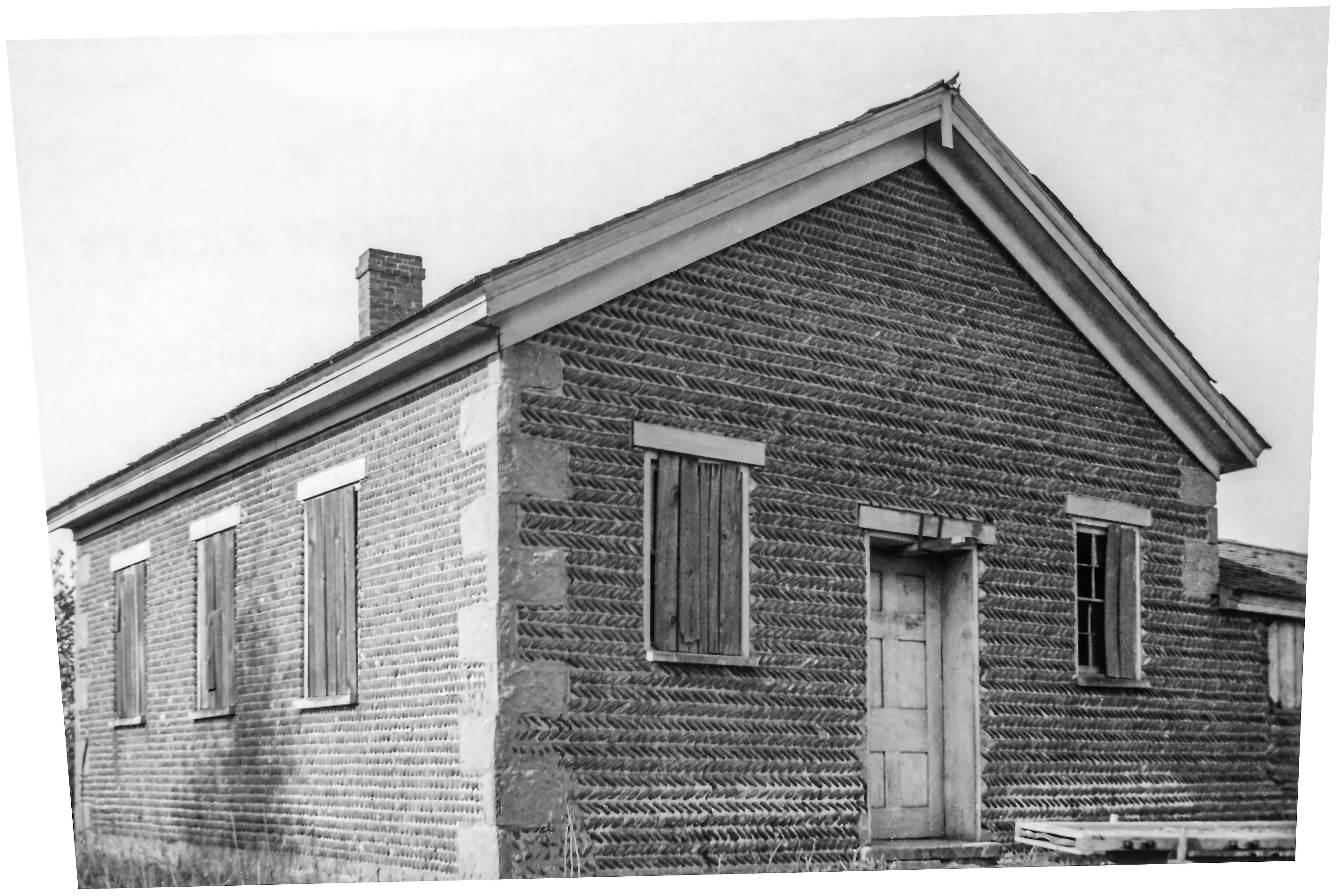
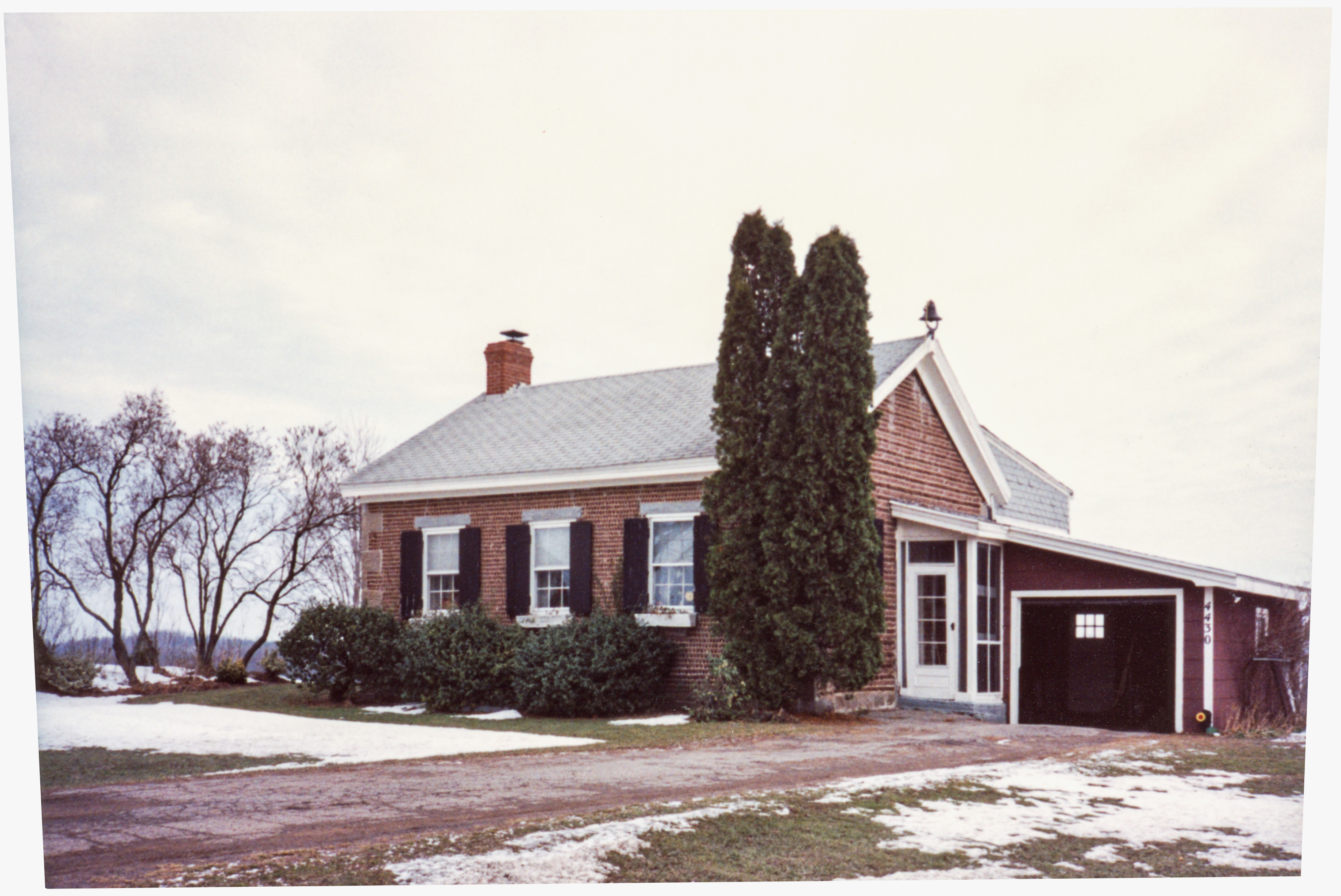
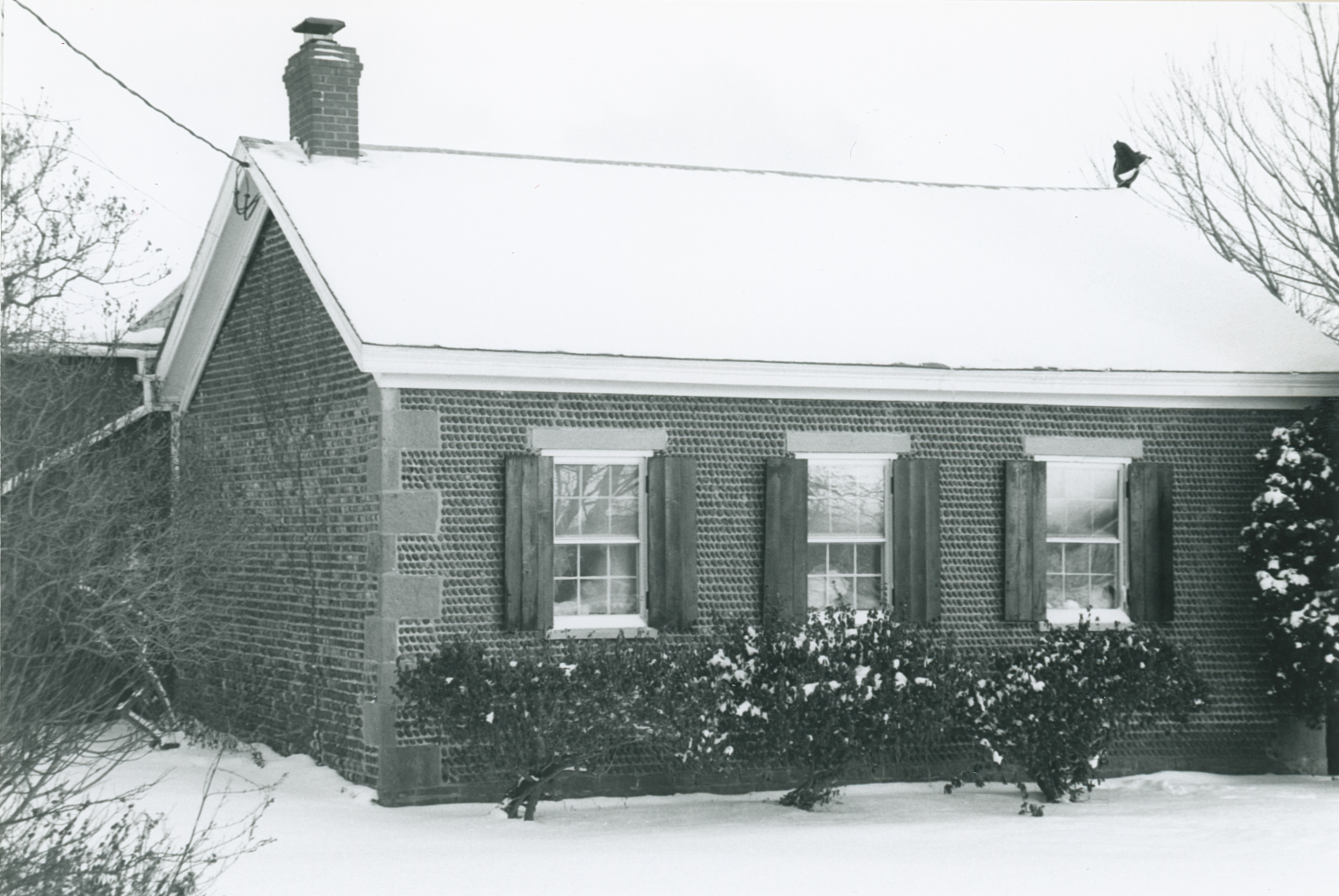
District School No. 6 at 4430 Eddy Ridge Road. It ceased being a school in 1923. Front wall facing south is herringbone design. Richard Palmer blog.
"The Cobblestone Houses of Upstate New York", compiled by Dorothy Wells Pease. Research done in collaboration with Hazel B. Jeffery, supplemented with material furnished by Carl F. Schmidt, 1941. Reference the seventh paragraph on page 36.
Column "Sun Spots": "The Eddy Ridge Cobblestone School", by Lilah Henry, The Williamson Sun and The Williamson Sentinel, Williamson, N. Y., 6/22/1950.
"Cobblestone Structures of Wayne County" School House excerpt, 1955, Verlyn Edward Klahn, pages 33, 175 and 176. Essay submitted for Hoffman Foundation, Wayne County History Scholarship, awarded 1955. Reprint permission granted by Wayne County Historian.
Eddy Ridge Road Schoolhouse belongs to Mr. M. W. Means. Handwritten note card by Gerda Peterich. Cobblestone Museum, circa 1955.
Tales, Triumphs and Tribulations of Marion's School Districts.
From a paper by: Heather Redmond for the Hoffman Award (specific to Wayne County History)
District schoolhouse #6 is located on Eddy Ridge Rd of Marion. This cobblestone schoolhouse has also been converted into a home. Below is described a typical day at district schoolhouse #6 in the year 1915.
School began at 9 AM and usually ended at 4 PM. If the children arrived at school early, they played various games outside until the teacher walked out ringing a sturdy handbell. This was the signal to start school, and the children would all rush in the schoolhouse to an outside hall. The boys were to hang their coats there, while the girls had a special closet in which to hang their belongings.
During the winter months the children wore leggings and felt boots. The boots were put in a row along the back room most of the time, but occasionally the students were allowed to put the boots by the coal stove in order to dry a bit better. The school had approximately four or five rows of desks with aisles in between each row.
The teacher's desk was situated in the front of the room upon a platform. Beside the desk was a pail of drinking water containing one tin dipper from which everyone drank. Years later this tin dipper was replaced with paper cups to prevent the spreading of colds. The students were to take turns fetching water from a well across the road at Mascle's farm to keep the pail full.
Behind the teacher's desk was the blackboard and on the teacher's desk was a desk bell which she used to signal the different classes up to the front of the room. This was done by grade levels starting with the first grade. The bell would ring and the first graders moved to the front rows of the classroom while the upper grades moved to the rear of the room.
The older students were expected to work on specific assignments disregarding the noise from the front of the room. Concentrating was sometimes the most difficult thing to do in a one room school setting. The children always had something to work on though.
The subjects taught were somewhat similar to today's subjects but were more concentrated in the basic courses. For example, school district #6 had no classes for band, chorus, wood shop, home economics or gym. Although they had no gym class, school district #6 was never without a softball team. One reason for this was there was never a shortage of boys. In 1915 the courses that were taught included geography (in which there was a regents), reading, writing, arithmetic, spelling and some history.
Once in a while there was a need for some discipline. The teacher took care of the problem without too much fuss. For example if a boy was not behaving as a young man should, he was simply seated on the girl's side of the room or told to move up to the front of the room. The same tactic was used on the girls, but problems did not occur as frequently with the girls as with the boys.
The winter classes were much bigger than the summer classes, as true with most of the district schools, because it was during the summer months that the boys would stay home to help fathers with the work to be done in the fields.
The bathroom facility was attached to the schoolhouse, but in order to get to the bathroom, you had to leave the schoolhouse and circle around to the side of the building. District schoolhouse #6 was surrounded by maple trees. Every Arbor Day the children planted saplings around the schoolhouse. Each tree had been named after the child who planted it.
The school had many school teachers. Some of these were Mary Content, Sylvia DeMay Liebert, Gertrude Luce and Gertrude Loveless. Some families that attended this district were the Dean, Allen, Ocques, Cook, Naeye, Boerman, Burbank, Crane, Bosse, Shipper, Mascle, Rice, Murphy, Johnson, Peck and DeRidder. Richard Palmer blog.
1962 purchased by W. C. Crais. Handwritten note on back of photographs by Gerda Peterich below.
Wayne Historians Organization (WHO), Historic Sites Inventory Cobblestone house
- "Cobblestone Architecture", 1944, Carl Schmidt: Name reference, School House
- Page 24, Page 57
- "Cobblestone Masonry", 1966, Carl Schmidt: Name reference, Schoolhouse
- Page 169, Page 243
- "The Era of Cobblestone Architecture", unpublished manuscript 1972. To access the manuscript content about this structure, see 140. Wayne County, Schoolhouse-Harter House. This structure is not included in the subsequent book "Cobblestone Landmarks of New York State", 1978.



.jpg)
.jpg)
¹ Image courtesy Richard Palmer. Attribution not provided.
² Photography courtesy Gerda Peterich. Cobblestone Museum.
³ Image courtesy Cobblestone Museum.
4 Photography courtesy Martin and Sheila Wolfish.
5 Photography courtesy Richard Palmer.
